Arlington Brewing Company
A website and content platform that lets a growing brewery publish its story, manage its catalog, promote events, and help people find its beer.
- Designer & full-stack developer
- 2025
Why it exists
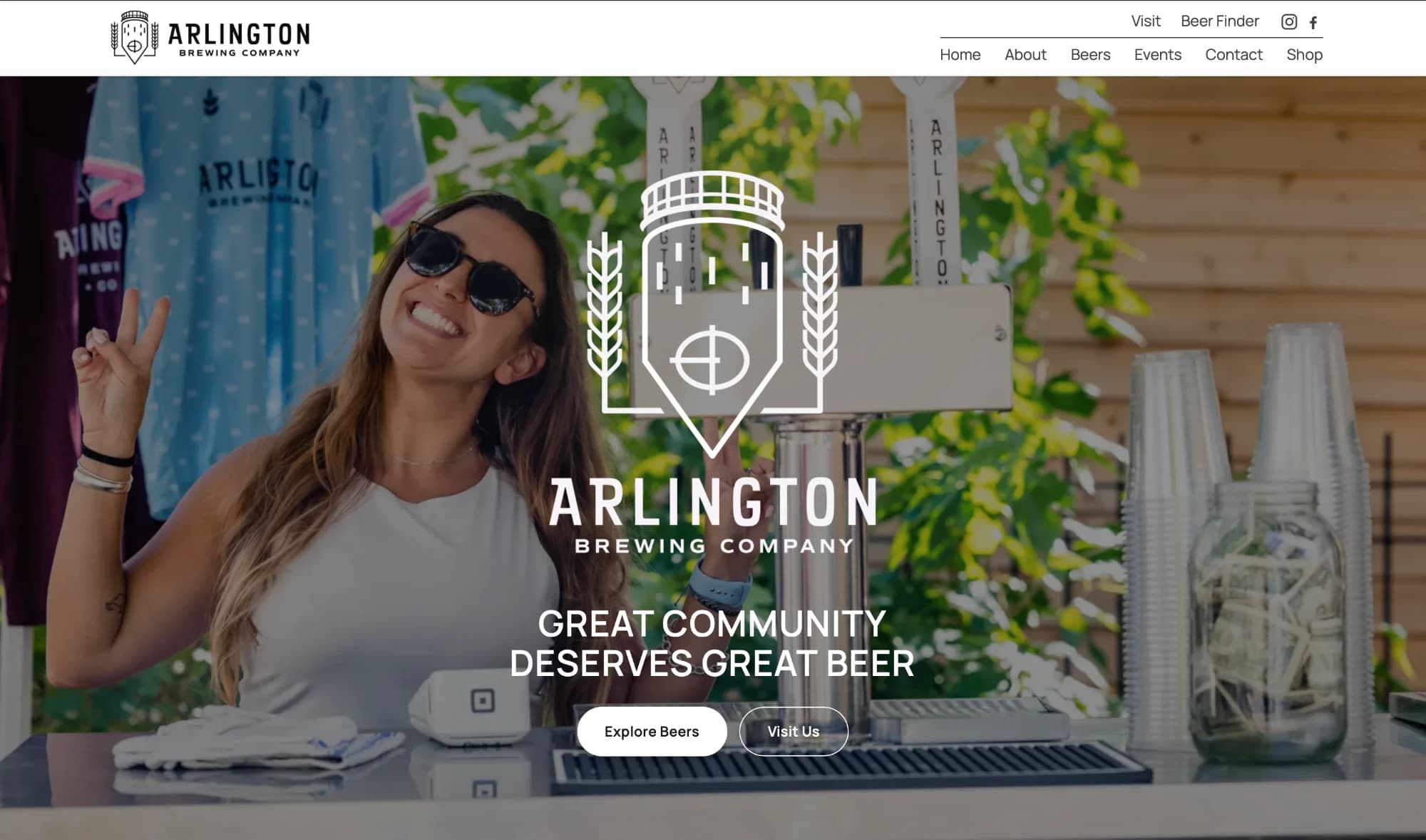
Arlington Brewing Company needed a real website, not a placeholder — somewhere to tell its story, keep a beer catalog current, announce events and answer the question customers ask most: where can I actually get this?
Just as important, the team needed to run it themselves. A site that only I could update would start decaying the week after launch.
What I owned
- Design and full-stack implementation of the production site.
- Beer catalog and beer detail pages.
- Event pages and taproom information.
- A location-aware beer finder built on Leaflet.
- The content model and CMS setup the team uses to keep the site current.
- Taking the project from development through public launch, working with the Arlington Brewing team.
Product & UX calls
The beer finder is the point
"Where can I buy this?" is the highest-intent question on a brewery site. Answering it on a map, in one interaction, matters more than any amount of homepage copy.
Model the catalog the way the brewery thinks
Content types follow how the team already talks about their product — beers, events, places — so publishing feels like describing the business rather than filling in a developer’s schema.
The age gate stays out of the way
Alcohol sites need an age gate. It is built to be quick, accessible and keyboard-usable, and to not become the memorable part of visiting the site.
Built to be handed over
Every piece of the site that changes week to week — beers, events, taproom details, locations — is content. The deploy is for code, not for a new can release.
How it's built
Application
Next.js 16 with React 19 and TypeScript, styled with Tailwind CSS 4 and implemented responsively for phones first — the beer finder is used standing in a store aisle.
Content
Sanity models beers, events, taproom details and locations, with Sanity Vision available for querying content during development and debugging.
Location experience
A Leaflet map renders the beer finder, backed by a data and geocoding workflow that turns the brewery’s list of accounts into coordinates the map can plot.
Delivery
Deployed on Vercel and shipped publicly with the Arlington Brewing team.
Everything in the build
- Next.js 16
- React 19
- TypeScript
- Tailwind CSS 4
- Responsive production implementation
- Sanity CMS
- Sanity Vision
- Leaflet
- Beer-finder data & geocoding workflow
- Vercel
The hard parts
Addresses are messy
Real distribution lists are not clean data. The geocoding workflow has to tolerate inconsistent address formatting and still produce a map that is trustworthy enough to send someone across town.
Where it landed
- The site is live at drinkarlingtonbeer.com and was taken from development through public launch.
- The production experience includes an age gate, beer catalog and detail content, events, taproom information and location discovery.
- The brewery team can publish and update content without developer involvement.
What I'd explore next
Directions I'm considering — none of this is built yet.
- Richer availability signals on the finder, so a pin communicates freshness as well as location.
- Event and release content that can be scheduled ahead of time.
- Structured data for events, so listings surface properly in search.